

...Home
- May 6, 2020
- 3 min read
Updated: May 7, 2020
Today I read the first chapter of "The Poetics of Space" by Gaston Bachelard, which discusses the personal aspects of the home beyond the appearance. At first I was confused, as the writing was difficult to understand, on my second read however, I realized he point he was trying to make: our home is more than a building. When we establish a home we are emotionally and psychologically tied to this place and what protection it offers us. Our home allows us to diverge from the brain's typical mindset of survival, and lets us relax and submerge ourselves in our imagination.
"This being the case, if I were asked to name the chief benefit of the house, I should say: the house shelters daydreaming, the house protects the dreamer, the house allows one to dream in peace. Thought and experience are not the only things that sanction human values. The values that belong to daydreaming mark humanity in its depth. Daydreaming even has a privilege of auto valorization. It derives direct pleasure from its own being. Therefore, the places in which we hav experienced daydreaming reconstitute themselves in a new daydream, and it is because our memories of former dwelling-places are relived as daydreams that that these dwelling-places of the past remain in us for all time." (Bachelard; Chapter 1; Page 6)
This particular paragraph sparked my interest because it resonated with my own experiences in my childhood home. I realized, on retrospect, that I spent more time daydreaming and imagining in high school than I do currently in college. It could be due to the time I have available to me, or the fact that I didn't have a room to myself in college, but I have a feeling that it has more to do with the fact that it was a new and changing environment. You can't get too comfortable in your college dorm because it's always subject to change—and therefore can never achieve the level of comfort to safely disassociate from reality like you can at your childhood house.



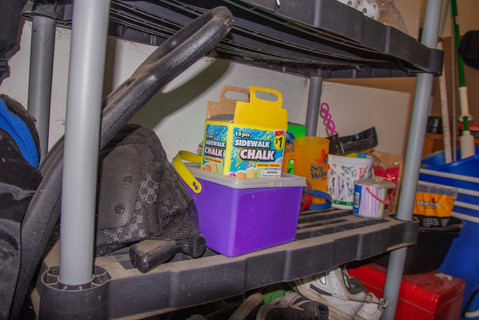




We are all in a particularly unconventional time with quarantine encroaching on our daily lives, and the fact is that several college students (myself included) have returned to their childhood homes to wait out the isolation. My own childhood home is in a suburb, slightly hidden by a small woods from the road. It is rather large for my small family of 3, as my parents intended on blessing me with a sibling when it was purchased... however, that never ended up happening. Therefore, when I was growing up I had a bedroom and a playroom all to myself. It was filled with Barbie dolls that now live in a closet under the stairs in my basement. I also spent a significant amount of time outside playing with friends and coloring in my kitchen.
My dad never really had a conventional childhood home, as he moved around a lot as a kid. My mother, however, did. I remember visiting her old neighbor who we called "Mrs. P," She lived on a small street in a small Michigan town, and she had bright green outdoor carpet going up her porch stairs. I love that I had this connection to my mothers childhood when I myself was young, and that we could share that experience though we lived it in different eras.



Comments